Subspecialised Fertility Treatment Centre
Diagnosis and treatment of male and female infertility, closely connected to the six departments of the reproductive biomedicine institute.
Science for health · Knowledge for life
Royan Institute is an Iranian research and treatment centre working across reproductive biomedicine, stem-cell biology, regenerative medicine and developmental biotechnology — and it is open to research partners worldwide.
Stem-cell biology and technology
Established 1991
Royan Institute brings research, specialised treatment, scientific education and technology commercialisation together on one campus — and works with universities, hospitals, companies and scientific networks abroad to move findings from the bench toward the bedside.
About Royan Institute
Royan Institute is committed to multidisciplinary, campus-wide collaboration between academic and medical staff in male and female infertility, embryo development, stem-cell biology and biotechnology.
The institute was established in 1991 by the late Dr Saeid Kazemi Ashtiani together with a group of researchers and physicians at Iran University of Medical Sciences, within the Academic Center for Education, Culture and Research (ACECR). It began as an outpatient surgery centre providing medical services to infertile couples alongside research and training in reproductive sciences.
In 2002 the research programme extended into stem-cell studies, and those findings were subsequently adapted for regenerative medicine and cell-therapy approaches. After three decades, Royan Institute focuses on the success rate of infertility treatment alongside embryo health, and on public health through cell-therapy clinical services.
To be an international centre of excellence in research and technology, and a pioneer in the development of science, technology and innovation in the biological sciences — with authority in stem-cell science, reproduction and biotechnology.
Institutional record
Each entry below is a dated milestone published by Royan Institute. The sequence itself is the point: reproductive medicine opened the way to stem-cell science, which opened the way to cell therapy and licensed products.
The first IVF child born in Tehran.
The first ICSI child born in Tehran.
The first child born in Iran from a frozen embryo.
The first human embryonic stem-cell line established in Iran and the region.
The first PGD child born in Iran; insulin-producing cells generated from human embryonic stem cells; adult stem cells used for the first time in Iran to treat myocardial infarction during CABG.
Establishment of the first private cord-blood bank in Iran.
The first cloned sheep born in Iran, at the Isfahan campus.
Mouse and human induced pluripotent stem cells (iPS) established.
The first transgenic goats born in Iran, able to secrete human coagulation factor IX and human tissue plasminogen activator in their milk.
Establishment of the pre-hospital cell-therapy service and the Stem Cell Bank.
The first auto-transplantation of cryopreserved human ovarian tissue in a cancer patient.
Establishment of the Faculty of Basic Sciences and Medical Technology, and of the Advanced Therapy Medicinal Product (ATMP) Technology Development Center.
Licence granted by the Iran FDA to produce Kimia-cell under GMP conditions at the Royan ATMP Center.
Production of the transgenic Covidsa mouse for pre-clinical studies of COVID-19 vaccines; ISO 9001:2015 certification for the Laboratory Animal Science Core Facility.
Phase I clinical trial of natural killer cell therapy for paediatric glioblastoma.
RoyinSheet and RoyinGraf, developed from Royan Institute research, entered the product portfolio of Royan Ati Tech Pharmed as the first allogeneic cell products in Iran.
Milestones as published on the Royan Institute About Us page. View the complete list and honours
Clinical care
Royan Institute carries out its research, training and therapeutic activities through three research institutes and three specialised service centres, following a strategy that runs from science to application.
Diagnosis and treatment of male and female infertility, closely connected to the six departments of the reproductive biomedicine institute.
Clinical cell-therapy services drawing on the institute's stem-cell research, its Stem Cell Bank and its advanced therapy medicinal product programme.
The Diabetes, Obesity and Metabolism Clinic, which also hosts public health programmes such as the annual World Diabetes Day event.
This page describes services offered by Royan Institute. It is general information about the institute and is not medical advice, a diagnosis, or a recommendation for any individual. Treatment options, suitability and outcomes are decided only after a clinical assessment by a qualified physician.
Research institutes
Basic, clinical and applied science are organised into three research institutes that share staff, facilities and a bench-to-bedside approach.
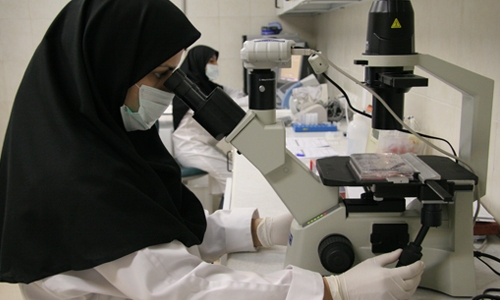
Research aimed at raising the fertility success rate while improving embryo health — covering ovarian stimulation protocols, embryo implantation, causes of implantation failure and miscarriage, sperm quality and selection, the effects of cancer treatment on gametes, ovarian tissue cryopreservation, early diagnosis of fetal anomalies, and pre-implantation genetic diagnosis.
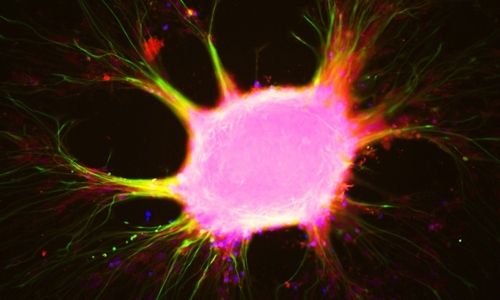
Founded to advance stem-cell biology research in Iran, the institute now studies stem cells and developmental biology, regenerative medicine, personalised medicine, cancer medicine, biomedical engineering, and brain and cognitive sciences. It works with biologists, engineers and medical academics on a coordinated bench-to-bedside approach, and runs two further initiatives in cancer medicine and biodiscovery.

Based in Isfahan Province, this institute made Royan Institute the pioneer of animal cloning in Iran and the Middle East, with the first cloned sheep in the region in 2006 and transgenic goats able to secrete human coagulation factor IX and human tissue plasminogen activator in their milk. Its aim is to make biotechnology a precision tool for future health development.
International collaboration
Royan Institute works with universities, research institutes, hospitals, scientific networks and technology partners. Below are the forms of collaboration the institute already supports — each one is an activity Royan Institute conducts today, not an aspiration.
Co-designed projects across reproductive biomedicine, stem-cell biology, regenerative medicine and biotechnology.
Work spanning biology, engineering and clinical medicine, in the institute's established cross-disciplinary model.
Translational research on experimental models and clinical trials, run with other clinical research centres.
Visits and placements connected to the institute's research departments and its faculty of basic sciences.
Short courses, workshops and the annual Royan International Summer School for students, graduates and professionals.
The annual congresses on reproductive biomedicine and on stem cells, with CME-accredited sessions and pre-congress workshops.
Product and process development through the ATMP Technology Development Center and affiliated laboratories.
Discussions handled through RITAC, which links innovators, idea owners and investors and manages venture investment.
Innovation and commercialisation
The Royan Innovative Technologies Acceleration and Commercialization Center (RITAC) was established in December 2019 to deepen the institute's value-creation ecosystem. It assesses feasibility, writes business plans, guides Research and Technology Laboratory work toward financing, and connects innovators and idea owners with investors.
Feasibility studies and business planning for research findings with commercial potential.
Research and Technology Laboratory work advanced toward financing and investment, with venture capital handled through RITAC.
Knowledge-based companies and start-up offices that take products to production and market.
Operates two cord-blood banks, one private and one public, supplying cells for cell-based treatment.
A spin-off producing biotechnological products for research, including recombinant proteins and growth factors for cell culture.
A knowledge-based company launched in 2018, part of the Barekat Pharmaceutical Group, working in technology transfer, commercialisation and drug manufacturing.
Education, congresses and scientific exchange
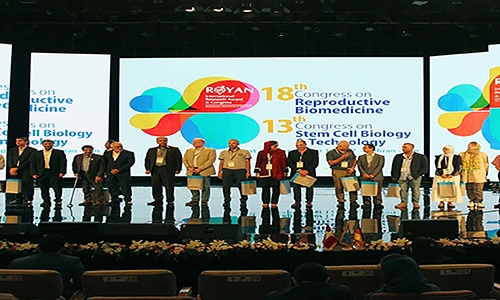
The 26th Royan International Congress on Reproductive Biomedicine was held from 3 to 5 September 2025, alongside the 21st International Congress on Stem Cells — accredited for Continuing Medical Education — and the 20th Nursing and Midwifery Seminar. The 24th International Royan Award was presented on 3 September 2025 at the International Conference Center of Shahid Beheshti University.
Specialised workshops and pre-congress scientific sessions run in conjunction with the congresses. The Royan International Summer School is held annually for students, graduates and professionals in the biomedical sciences; the 17th edition, “Therapeutic Symphony: Unleashing the Regenerative Potential of the Microbiome”, took place at the University of Science and Culture.
Royan Institute also established a Faculty of Basic Sciences and Medical Technology in 2018.
Scientific output
Royan Institute publishes its own English-language journals and its researchers appear in international citation rankings — five were listed among the top two per cent of scientists worldwide in the Stanford University ranking reported in October 2025.
An English-language journal of Royan Institute publishing research in cellular, molecular and related fields. Its publication frequency was revised in 2025.
ISSN 2228-5806A Royan Institute journal in reproductive medicine. Volume 19, issue 4 covers October to December 2025.
Recognised by Iran's Ministry of Health and Medical Education for its ranking in reproductionInternational patients
The IPD was established so that distance and language would not stand between patients and infertility treatment. It welcomes patients from different national and cultural backgrounds and coordinates care from first contact to follow-up after they return home.
Online or in-person consultation with the IPD doctor, by email, WhatsApp or in person.
Referral to a specialist team by the IPD doctor, and scheduling of an in-person appointment.
A medical treatment letter can be submitted to the embassy for a visa where needed. Interpreters fluent in English, French, Arabic, Kurdish and Turkish accompany patients throughout treatment, and ticket, accommodation and tour arrangements can be provided on request.
Medical training is given before patients return home, and treatment is followed up online after they arrive.
Full International Patients Department page on royan.org
Information on this page describes the services and coordination the International Patients Department provides. It is not medical advice and does not predict any individual outcome. Suitability for treatment is determined only through clinical assessment.
News
Each item below is dated as published on the Royan Institute news page. Replace this list when the official page is updated — see AUDIT-REPORT.md for the maintenance note.
On 18 November 2025 Royan Institute hosted a national event on the theme “Diabetes and the Workplace”, bringing together policymakers, medical experts and members of the public.
Organised by Royan Institute and held at the conference hall of the University of Science and Culture.
A Child Health Monitoring Task Force of specialist faculty members began work on 5 November 2025 at the Royan Institute Diabetes Clinic.
Specialists at a knowledge-based company affiliated with Royan Institute developed a key component for the use of umbilical cord blood stem cells.
Five researchers were recognised in the ranking published on Stanford University's website.
The 26th International Congress and the 24th International Royan Award were held on Wednesday 3 September at the International Conference Center of Shahid Beheshti University.
Contact
Patient enquiries and institutional enquiries are handled separately. Use the International Patients Department for treatment questions, and the official Royan Institute contact channels for research, academic and commercial enquiries.
Consultation, referral, appointments, visa treatment letters, interpretation and follow-up.
Joint research, exchange, congress participation, technology development, licensing and investment discussions.
A dedicated collaboration address is not published on the official English pages, so enquiries should be routed through the official Royan Institute contact channels.